What Is an ATS? The Complete Beginner’s Guide in 2025

What Is an ATS? The Complete Beginner’s Guide in 2025

Learn what an Applicant Tracking System (ATS) is, how it works, and why companies use ATS software to hire smarter and faster in 2025.

Written by

By

Christian Jebrail profile

Christian Jebrail

·

Oct 18, 2025

·

Oct 18, 2025

SHARE THIS POST
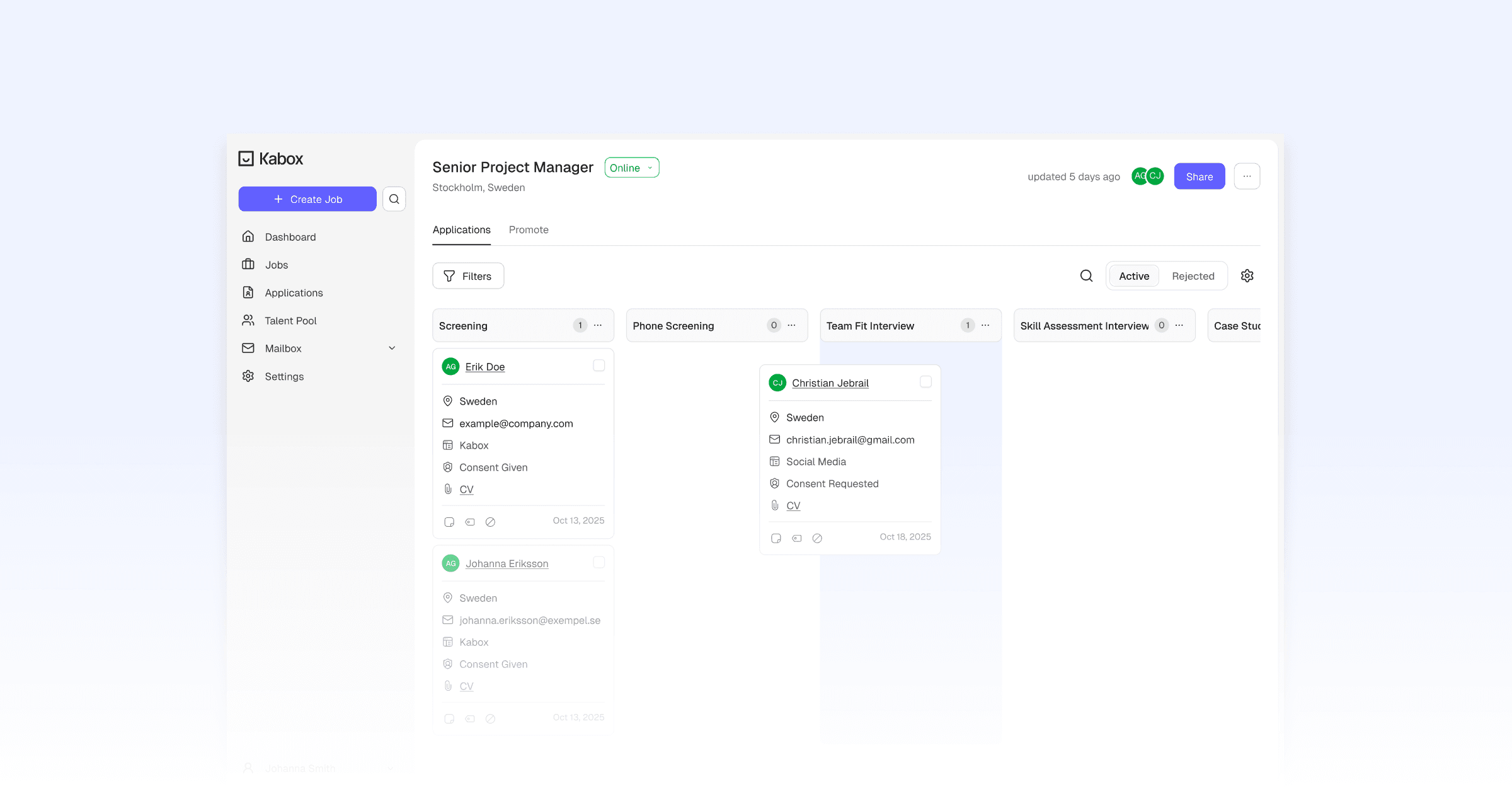
dashboard of kabox ats

Why You Need to Understand ATS in 2025

The hiring landscape is evolving rapidly. Companies are racing to attract top talent, while job seekers expect faster, more transparent, and tech-driven experiences. That’s where an Applicant Tracking System (ATS) comes in.

If you’ve ever wondered “What is an ATS?” — or whether your company really needs one — this beginner-friendly guide will walk you through everything you should know. From how an ATS works to how it can save you time, reduce bias, and improve candidate experience, we’ll break it all down in simple terms.

What Is an Applicant Tracking System (ATS)?

An Applicant Tracking System (ATS) is a recruitment software platform that helps companies organize, track, and manage job applicants throughout the hiring process.

Think of it as your digital hiring assistant — one that stores candidate data, filters applications, and streamlines communication between recruiters and candidates.

Instead of juggling emails, spreadsheets, and random notes, an ATS brings everything into one centralized dashboard.

In short, an ATS helps you:

  • Post jobs across multiple platforms

  • Receive and organize applications

  • Filter candidates automatically

  • Schedule interviews and manage communication

  • Track hiring progress and analytics

Tools like kabox.io are designed specifically to make these steps faster, easier, and more data-driven.

How Does an ATS Work?

Here’s a simplified look at the workflow:

  1. Job Posting - You create and publish a job listing on multiple job boards, LinkedIn, and your careers page directly from your ATS.

  2. Application Collection - Candidates apply through forms connected to your ATS, and their data is automatically stored.

  3. Filtering and Screening - The system uses keywords, experience, or qualifications to shortlist suitable candidates.

  4. Communication - Recruiters send updates, schedule interviews, and share feedback - all within one system.

  5. Data and Reporting - At every stage, the ATS tracks metrics such as time to hire, source of hire, and conversion rates.

Why Companies Are Adopting ATS Solutions Quickly

Take Sweden as an example. As one of Europe’s most digitally advanced job markets, but even here, many small and mid-sized companies still manage hiring manually.

Here’s why that’s changing fast:

  1. Efficiency and Time Savings - An ATS automates repetitive tasks like sorting resumes or scheduling interviews. For recruiters juggling dozens of openings, that’s hours saved each week.

  2. Better Candidate Experience - Candidates expect a smooth, respectful process. Automated updates and transparent communication through an ATS help strengthen your employer brand.

  3. Compliance with GDPR - Hiring involves sensitive personal data. A modern ATS like kabox.io is built to handle data privacy, consent, and security according to GDPR - something spreadsheets can’t do reliably.

  4. Data-Driven Decisions - With built-in analytics, you can see which job boards perform best, how long it takes to fill roles, and where bottlenecks appear. This turns your hiring into a measurable, improvable process.

Key Features to Look for in an ATS

When choosing an ATS, look for features that suit your company’s size and goals:

Feature

Why It Matters

Multi-Channel Job Posting

Publish to LinkedIn, Arbetsförmedlingen, Career page, and more with one click.

Automated Candidate Screening

Filters out unqualified applicants instantly.

Collaboration Tools

Let hiring managers and recruiters share notes and feedback easily.

Custom Pipelines

Tailor your recruitment stages for different roles.

Analytics Dashboard

Get real-time hiring metrics.

GDPR Compliance

Ensure safe, legal data handling in the EU.

Kabox.io, for example, is built with these features in mind - offering automation without losing the human touch.

Common Myths About ATS (And the Truth)

❌ “ATS only works for big companies.”

Not true. Many startups and SMEs use lightweight ATS tools to save time and stay competitive.

❌ “ATS filters out good candidates.”

Modern systems use smarter algorithms and human review. With good setup, you won’t miss qualified applicants.

❌ “ATS are too expensive.”

Many cloud-based tools (like Kabox.io) offer flexible pricing, making them accessible even to small teams.

Benefits of Using an ATS in Sweden

Let’s sum up what an ATS brings to the table:

Faster time-to-hire
Reduced admin work
Better candidate experience
Data-driven insights
GDPR compliance
Improved team collaboration

In short - an ATS helps companies hire smarter, faster, and more fairly.

When Should You Invest in an ATS?

If you’re managing more than a handful of open roles or spending hours organizing resumes manually, it’s time.

Here are some signs:

  • You’re missing out on great candidates because of slow responses.

  • Your hiring data is scattered across tools.

  • You lack visibility into what’s working and what’s not.

  • You want to project a professional, tech-forward image.

An ATS gives structure to your recruitment process and helps your brand stand out in a competitive job market.

Want to see Kabox in action?

Schedule a 30-min demo

Why You Need to Understand ATS in 2025

The hiring landscape is evolving rapidly. Companies are racing to attract top talent, while job seekers expect faster, more transparent, and tech-driven experiences. That’s where an Applicant Tracking System (ATS) comes in.

If you’ve ever wondered “What is an ATS?” — or whether your company really needs one — this beginner-friendly guide will walk you through everything you should know. From how an ATS works to how it can save you time, reduce bias, and improve candidate experience, we’ll break it all down in simple terms.

What Is an Applicant Tracking System (ATS)?

An Applicant Tracking System (ATS) is a recruitment software platform that helps companies organize, track, and manage job applicants throughout the hiring process.

Think of it as your digital hiring assistant — one that stores candidate data, filters applications, and streamlines communication between recruiters and candidates.

Instead of juggling emails, spreadsheets, and random notes, an ATS brings everything into one centralized dashboard.

In short, an ATS helps you:

  • Post jobs across multiple platforms

  • Receive and organize applications

  • Filter candidates automatically

  • Schedule interviews and manage communication

  • Track hiring progress and analytics

Tools like kabox.io are designed specifically to make these steps faster, easier, and more data-driven.

How Does an ATS Work?

Here’s a simplified look at the workflow:

  1. Job Posting - You create and publish a job listing on multiple job boards, LinkedIn, and your careers page directly from your ATS.

  2. Application Collection - Candidates apply through forms connected to your ATS, and their data is automatically stored.

  3. Filtering and Screening - The system uses keywords, experience, or qualifications to shortlist suitable candidates.

  4. Communication - Recruiters send updates, schedule interviews, and share feedback - all within one system.

  5. Data and Reporting - At every stage, the ATS tracks metrics such as time to hire, source of hire, and conversion rates.

Why Companies Are Adopting ATS Solutions Quickly

Take Sweden as an example. As one of Europe’s most digitally advanced job markets, but even here, many small and mid-sized companies still manage hiring manually.

Here’s why that’s changing fast:

  1. Efficiency and Time Savings - An ATS automates repetitive tasks like sorting resumes or scheduling interviews. For recruiters juggling dozens of openings, that’s hours saved each week.

  2. Better Candidate Experience - Candidates expect a smooth, respectful process. Automated updates and transparent communication through an ATS help strengthen your employer brand.

  3. Compliance with GDPR - Hiring involves sensitive personal data. A modern ATS like kabox.io is built to handle data privacy, consent, and security according to GDPR - something spreadsheets can’t do reliably.

  4. Data-Driven Decisions - With built-in analytics, you can see which job boards perform best, how long it takes to fill roles, and where bottlenecks appear. This turns your hiring into a measurable, improvable process.

Key Features to Look for in an ATS

When choosing an ATS, look for features that suit your company’s size and goals:

Feature

Why It Matters

Multi-Channel Job Posting

Publish to LinkedIn, Arbetsförmedlingen, Career page, and more with one click.

Automated Candidate Screening

Filters out unqualified applicants instantly.

Collaboration Tools

Let hiring managers and recruiters share notes and feedback easily.

Custom Pipelines

Tailor your recruitment stages for different roles.

Analytics Dashboard

Get real-time hiring metrics.

GDPR Compliance

Ensure safe, legal data handling in the EU.

Kabox.io, for example, is built with these features in mind - offering automation without losing the human touch.

Common Myths About ATS (And the Truth)

❌ “ATS only works for big companies.”

Not true. Many startups and SMEs use lightweight ATS tools to save time and stay competitive.

❌ “ATS filters out good candidates.”

Modern systems use smarter algorithms and human review. With good setup, you won’t miss qualified applicants.

❌ “ATS are too expensive.”

Many cloud-based tools (like Kabox.io) offer flexible pricing, making them accessible even to small teams.

Benefits of Using an ATS in Sweden

Let’s sum up what an ATS brings to the table:

Faster time-to-hire
Reduced admin work
Better candidate experience
Data-driven insights
GDPR compliance
Improved team collaboration

In short - an ATS helps companies hire smarter, faster, and more fairly.

When Should You Invest in an ATS?

If you’re managing more than a handful of open roles or spending hours organizing resumes manually, it’s time.

Here are some signs:

  • You’re missing out on great candidates because of slow responses.

  • Your hiring data is scattered across tools.

  • You lack visibility into what’s working and what’s not.

  • You want to project a professional, tech-forward image.

An ATS gives structure to your recruitment process and helps your brand stand out in a competitive job market.

Want to see Kabox in action?

Schedule a 30-min demo